
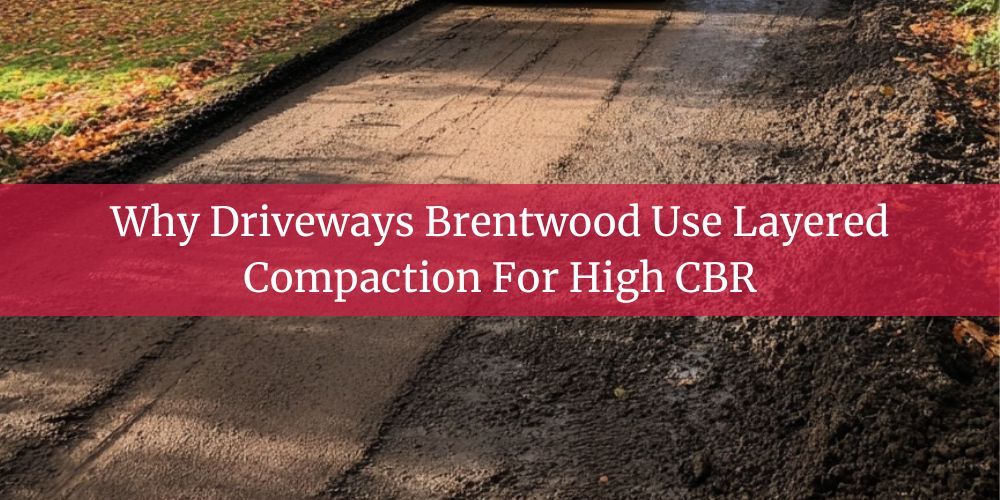
Driveways Brentwood also use layered compaction to ensure a high California Bearing Ratio (CBR). The process involves layered compaction using specific materials tailored to local soil conditions to ensure durability and stability. The subsoil in Brentwood often presents challenges with clay content, which requires careful layering and compaction techniques to prevent future settling and cracking. Using locally-sourced aggregates, contractors strategically compact each layer to optimise load-bearing capacity, ensuring the driveway withstands the typical weather patterns and traffic loads of the area.
For Brentwood homeowners, understanding the intricacies of driveway construction can prevent costly repairs and enhance property value. In this blog, we’ll delve into the essential methods and materials used for constructing high CBR driveways, offering insights from local experts and real-world examples specific to Brentwood, Essex.
What is the Importance of High CBR in Driveway Construction?
The California Bearing Ratio (CBR) is crucial for assessing subgrade strength in driveway construction. Ensuring a high CBR value helps improve load-bearing capacity, reduces the risk of surface deformation, and extends the lifespan of the driveway. A solid understanding of CBR values guides the selection of appropriate materials and construction techniques to achieve durable driveways. Here are the key reasons why a high CBR is important in driveway construction:
- Load-Bearing Capacity: Supports heavy loads without sinking or shifting.
- Surface Stability: Minimises deformation and maintains a smooth driving surface.
- Longevity: Ensures extended lifespan with minimal maintenance needs.
- Material Efficiency: Allows the use of fewer and appropriate construction materials.
- Cost Effectiveness: Reduces long-term repair and maintenance expenses.
1. Load-Bearing Capacity: Supports heavy loads without sinking or shifting.
Load-bearing capacity refers to the subgrade's ability to support imposed loads. A high CBR value directly impacts the driveway's ability to handle vehicle weight without causing ruts or settling. For residential or commercial driveways, maintaining a high load-bearing capacity is crucial for functionality and safety. Given the constant stress from vehicle traffic, a robust load-bearing capacity safeguarded by a high CBR ensures the structural integrity and reliability of the driveway over time.
2. Surface Stability: Minimises deformation and maintains a smooth driving surface.
Surface stability refers to the prevention of surface irregularities under stress. When a driveway’s subgrade has a high CBR value, it can effectively prevent surface deformation due to consistent loading and unloading. This stability ensures the driveway remains even and smooth, enhancing vehicle comfort and safety. Less deformation translates to fewer maintenance interventions and an appealing driveway appearance, which is often important for property aesthetics.
3. Longevity: Ensures extended lifespan with minimal maintenance needs.
Longevity in construction refers to the length of time a structure remains functional with minimal upkeep. Driveways built over subgrades with a high CBR tend to have a longer lifespan as the foundational strength reduces wear and tear. The increased resilience to weathering and mechanical stresses results in fewer repairs and longer service life. Investing in a high CBR at the onset reduces the likelihood of costly rehabilitation, preserving value over time.
4. Material Efficiency: Allows the use of fewer and appropriate construction materials.
Material efficiency involves using the right amount of resources to achieve desired outcomes. With a high CBR value, the need for extensive material reinforcement diminishes, as the natural subgrade provides substantial support. This can potentially translate to using fewer materials, which in turn lowers construction costs. Given environmental considerations, efficient material usage aligns with sustainable building practices, making it beneficial for both cost and environmental impact.
5. Cost Effectiveness: Reduces long-term repair and maintenance expenses.
Cost effectiveness refers to achieving optimal results with minimal financial outlay over time. Implementing a high CBR in driveway construction directly affects long-term cost savings through reduced maintenance and repairs. Driveways with structurally sound subgrades withstand environmental and mechanical challenges better, cutting down on periodic repair needs. This not only offers monetary savings but also minimises inconvenience associated with frequent maintenance, underscoring the financial and practical importance of a high CBR.
Have a question about an upcoming project?
How Does Layered Compaction Enhance Driveway Durability?
Layered compaction improves driveway durability by creating a solid and stable foundation. Each compacted layer helps prevent shifting and settling, resulting in a more resilient and long-lasting surface. This approach is essential in supporting heavy loads and reducing maintenance costs over time. The durability of a driveway is significantly enhanced through a series of structured steps during construction. Here is an ordered list detailing how each aspect of layered compaction contributes to a durable driveway:
- Foundation Stability: Ensures a strong base to prevent shifting and cracking.
- Load-Bearing Capacity: Enhances ability to support heavy vehicles without damage.
- Moisture Resistance: Reduces porosity to prevent water infiltration and erosion.
- Consistency in Compaction: Achieves uniform strength across the entire driveway surface.
- Longevity: Extends the life of the driveway, reducing future repair needs.
1. Foundation Stability: Ensures a strong base to prevent shifting and cracking.
Foundation stability refers to the ability of the driveway’s base to remain intact without altering its position over time. For driveways, a stable foundation ensures that the surface does not crack or become uneven. By compacting layers progressively, each segment contributes to the overall integrity of the driveway. This strong base layer is crucial as it supports the layers above and distributes the load evenly, preventing localised stress and potential surface failure.
2. Load-Bearing Capacity: Enhances ability to support heavy vehicles without damage.
Load-bearing capacity is the maximum load the driveway can support without deformation or damage. Layered compaction directly contributes to this by consolidating materials so they can hold the weight of vehicles such as cars and trucks. A high load-bearing capacity prevents rutting and distortion when heavy vehicles repeatedly traverse the driveway. Ensuring this capacity helps maintain a smooth and even surface, essential for both functionality and aesthetic purposes.
3. Moisture Resistance: Reduces porosity to prevent water infiltration and erosion.
Moisture resistance is the capability of the driveway to resist permeation and damage by water. During the layered compaction process, the tightly packed materials decrease porosity, which stops water from seeping in. This is important because water infiltration can lead to issues like base erosion and freeze-thaw cycles causing surface cracking. Thus, enhanced moisture resistance through layered compaction is vital for maintaining the driveway’s integrity and appearance.
4. Consistency in Compaction: Achieves uniform strength across the entire driveway surface.
Consistency in compaction involves achieving an even density and strength throughout the driveway’s construction layers. This uniformity is crucial as it prevents weak spots that might lead to failures under pressure. Each layer's compaction ensures that there are no irregularities that could compromise the driveway’s durability. With consistent compaction, the entire driveway performs as a single, strong unit, leading to reduced repair and maintenance costs over its lifespan.
5. Longevity: Extends the life of the driveway, reducing future repair needs.
Longevity concerns the length of time a driveway remains functional without significant repair or reconstruction. The application of layered compaction directly relates to the driveway's longevity by building a robust structure resistant to common wear and tear. A well-compacted driveway can endure environmental stresses and direct traffic impacts over the years. By extending the lifespan of the driveway, homeowners can avoid frequent repairs, facilitating better cost efficiency and long-term satisfaction.
What Are the Best Practices for Building Brentwood Driveways?
To build effective Brentwood driveways, focus on a solid foundation, quality materials, proper drainage, and aesthetics. Building a durable and functional driveway in Brentwood requires careful planning and execution, considering the region's specific climate and aesthetic standards. Here are some best practices to ensure success:
- Site Preparation: Clear and level the ground for a stable base.
- Base Layer: Use a thick layer of crushed stone for solid support.
- Quality Materials: Select durable materials like concrete, pavers, or asphalt.
- Proper Drainage: Design efficient drainage to prevent water accumulation.
- Sealing and Maintenance: Regularly seal the driveway to prolong its lifespan.
1. Site Preparation: Clear and level the ground for a stable base.
Site preparation involves removing any obstacles and ensuring the ground is level. Proper site preparation is crucial to prevent future cracking or sinking of the driveway. This step also involves ensuring that the driveway layout is correctly aligned with property lines and design plans.
2. Base Layer: Use a thick layer of crushed stone for solid support.
The base layer provides the foundational support for the driveway. A stable base layer helps distribute weight evenly, which minimises stress on the surface layer. An inadequate base can lead to premature failures, like potholes or significant cracking.
3. Quality Materials: Select durable materials like concrete, pavers, or asphalt.
Using high-quality materials ensures the driveway will withstand daily wear and environmental conditions. Options like concrete and pavers can also be customised for aesthetic appeal. While initial costs may be higher, durable materials often lead to savings in the long term with reduced repairs.
4. Proper Drainage: Design efficient drainage to prevent water accumulation.
Effective drainage controls water flow and prevents pooling on the driveway surface. Water pooling can lead to structural damage and increase the chance of accidents due to slippery surfaces. Incorporate drainage solutions such as sloping or installing French drains alongside the driveway.
5. Sealing and Maintenance: Regularly seal the driveway to prolong its lifespan.
Sealing prevents moisture infiltration and protects the surface from wear and tear. Regular maintenance, like sealing, keeps the driveway in prime condition and enhances visual appeal. Scheduling routine checks and cleaning can identify potential issues early, reducing costly repairs over time.
Ensuring a sturdy and reliable driveway in Brentwood, Essex, begins with understanding the significance of layered compaction for high California Bearing Ratio (CBR). By applying this technique, residents can enhance the durability and longevity of their driveways amidst the British weather conditions. Whether you're looking to refurbish existing driveways or extend new ones alongside patios, the right approach can significantly elevate the value and aesthetic of any property in Brentwood, Essex. This understanding is crucial not only for driveways but also for patios, ensuring that both aspects of your outdoor space can withstand the test of time while offering functionality and beauty.
If you're looking for expert guidance on enhancing or installing driveways and patios, do not hesitate to reach out via our contact form. Our expert team at Driveways Brentwood, is ready to assist you with tailored solutions to meet your specific needs and bring your vision to life.